Earie documentation
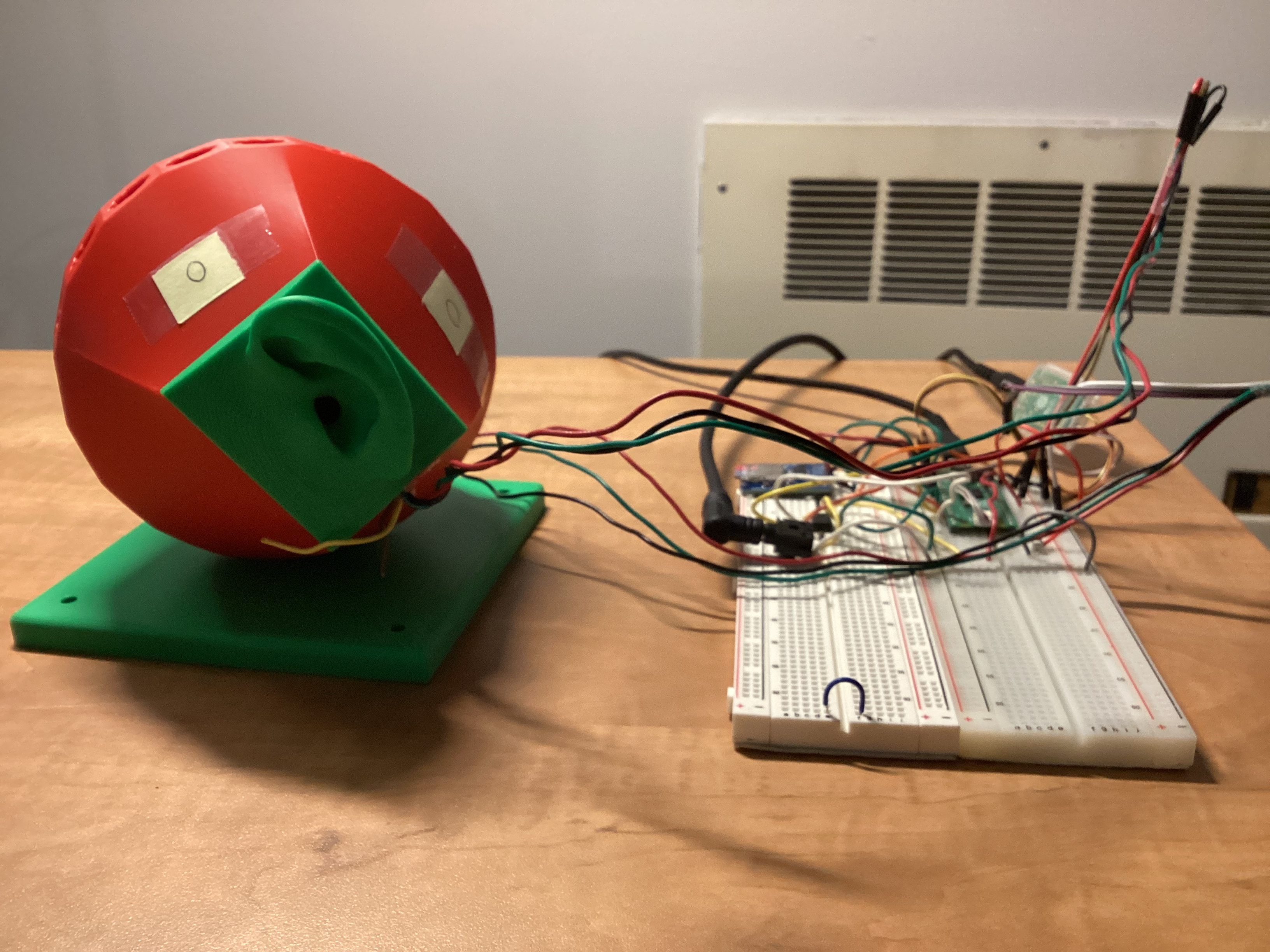
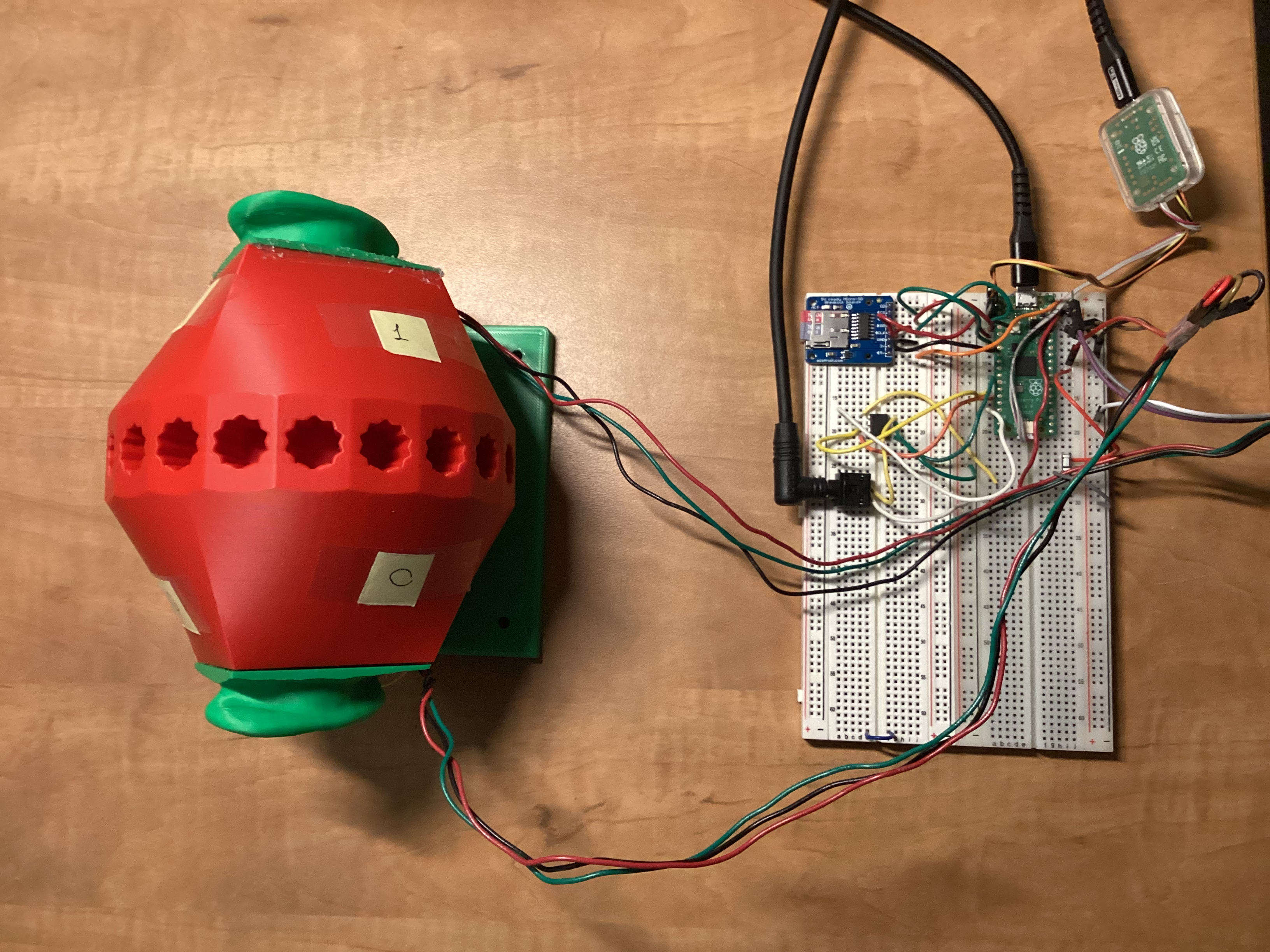
Understanding the mechanics of audio localization in humans as well as other animals is a very fascinating topic as it demonstrates the complexity yet elegant nature of the ear and the brain. This project is grounded in the observation that in a binaural system (where each ear acts as a receiver), sound waves arriving from any non-midline direction result in a measurable Interaural Time Difference (ITD), a direct consequence of the differing path lengths to each ear. Since the sign of the ITD indicates which ear received the sound first (negative often signifying the left ear), this cue is sufficient to determine if the sound source is to the left or right of the median sagittal plane. However, the ITD alone is inadequate for discerning the sound’s vertical location (elevation).
|
|
Contents:
- High Level Design
- Program & Hardware Design
- Dummy Head
- WAV File
- Microphone Input
- ADC Reading for 2 channels
- Ring buffer and FatFS (file handling) and SD card write
- Synthesizing sound primitives
- Audio output & SD card read
- Serial Interface for program control (3-5 sentences)
- Calculating the ITD from collected data
- Data Pre-processing
- Model Architecture and Training
- Running the Model on the RP2040 using pico-tflmicro
- Results of the Design
- Conclusion
- Appendices